
Building an Efficient Supply Program Across Multiple Sites
28th Sep 2026
Managing cleaning products for one building takes organization, but managing supplies across several locations creates a much bigger operational challenge. Each facility may have different traffic levels, cleaning schedules, storage capacities, and product requirements that affect purchasing decisions. Without a consistent system, businesses can quickly encounter excess inventory, unexpected shortages, inconsistent products, and unnecessary spending. Building an efficient supply program gives every location reliable access to the professional cleaning products it needs while giving management stronger control over costs and purchasing. Cleaning Stuff knows that building an efficient supply program across multiple sites makes a difference to your operation.
Start With a Complete Site-by-Site Supply Assessment
An efficient program starts with understanding what each facility actually uses instead of relying on estimates or old purchasing habits. Managers should document the cleaning products, paper goods, liners, equipment, accessories, and replacement items that each location orders regularly. They should also examine average usage rates, storage limitations, cleaning frequency, building size, and seasonal fluctuations that could change demand. This assessment creates a realistic purchasing baseline and helps decision-makers identify unnecessary product variations across the organization.
A detailed review often uncovers significant differences between locations that perform similar cleaning tasks. One building may use several specialty cleaners while another handles comparable surfaces with a smaller, more versatile product selection. Teams can compare these patterns and determine whether certain products provide meaningful performance advantages or simply complicate purchasing. Eliminating unnecessary duplication can reduce inventory requirements while making the entire supply program easier to manage.
Create Clear Inventory Minimums and Maximums
Keeping more supplies than necessary can seem safer, but excessive inventory ties up money and consumes valuable storage space. Keeping too little creates a different problem because staff may run out of essential products before replacement orders arrive. Multi-site organizations need inventory targets that reflect actual consumption instead of arbitrary quantities or individual preferences. Minimum and maximum levels create simple boundaries that help teams reorder products at appropriate times.
Managers can establish these targets by reviewing historical usage and typical delivery schedules for frequently purchased items. A facility that uses several cases of liners every week needs a different reorder point than a small administrative office with limited waste volume. Seasonal demand also matters because weather, occupancy, special events, and scheduled deep cleaning can temporarily increase consumption. Regularly reviewing these thresholds keeps inventory levels aligned with changing facility needs rather than outdated assumptions.
Build a Consistent Ordering Process
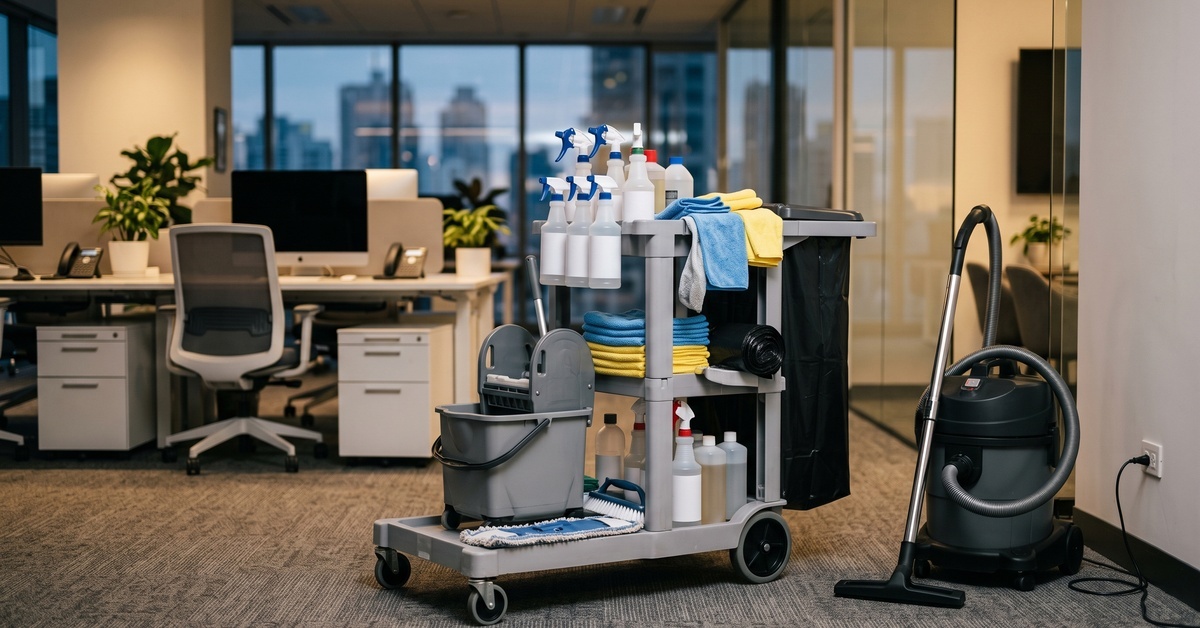
Even a carefully selected product catalog cannot create efficiency when every location follows a different purchasing process. Businesses should establish clear ordering responsibilities, approval limits, purchasing schedules, and documentation standards across their sites. A predictable process reduces emergency orders while helping leadership understand who purchases products and why. It also gives facility managers enough structure to make timely decisions without creating unnecessary administrative delays.
A practical ordering framework should answer several important questions, such as:
- Identify who monitors inventory and submits each location’s orders.
- Establish reorder points for frequently used cleaning and janitorial products.
- Set purchasing schedules when regular ordering makes operational sense.
- Define approval requirements for unusually large or nonstandard purchases.
- Maintain an approved list of products, sizes, and acceptable alternatives.
- Track emergency purchases separately to identify recurring inventory problems.
Consolidate Purchasing With the Right Supplier
Managing multiple vendors can make a multi-site supply program unnecessarily difficult. Separate vendors create additional invoices, ordering systems, delivery schedules, product catalogs, and account relationships for purchasing teams to manage. Working with a dependable cleaning supplies supplier that offers a broad professional catalog can consolidate more purchases under one source and simplify procurement. This approach becomes especially valuable when an organization needs everything from everyday consumables to floor-care equipment and specialized janitorial products.
Catalog depth matters because multi-site organizations rarely need only one category of maintenance products. Facilities may purchase floor scrubbers, buffers, bath tissue, trash bags, chemicals, vacuum accessories, dispensers, cleaning tools, and replacement components throughout the year. Access to thousands of professional-grade choices allows purchasing teams to compare performance levels and price points without constantly adding new vendors. Supplier expertise also helps businesses identify appropriate alternatives when they need to balance performance requirements with budget goals.
Match Products to Real Facility Requirements
Standardization works best when businesses combine it with practical flexibility. A warehouse, healthcare facility, office building, school, retail location, and industrial site may all require different levels of cleaning performance. Forcing every building to use identical products can create inefficiencies when surfaces, soils, equipment, or maintenance expectations differ significantly. Strong supply programs standardize where practical while allowing carefully controlled exceptions where operational needs justify them.
Product selection should start with the task that employees need to accomplish. Managers should consider flooring materials, restroom traffic, waste volume, cleaning frequency, equipment specifications, safety requirements, and the types of soil employees routinely encounter. They can then choose products at appropriate performance and price levels instead of automatically purchasing premium options for every application. This task-focused approach supports cleaner facilities while protecting budgets across a diverse property portfolio.
Improve Storage and Inventory Visibility
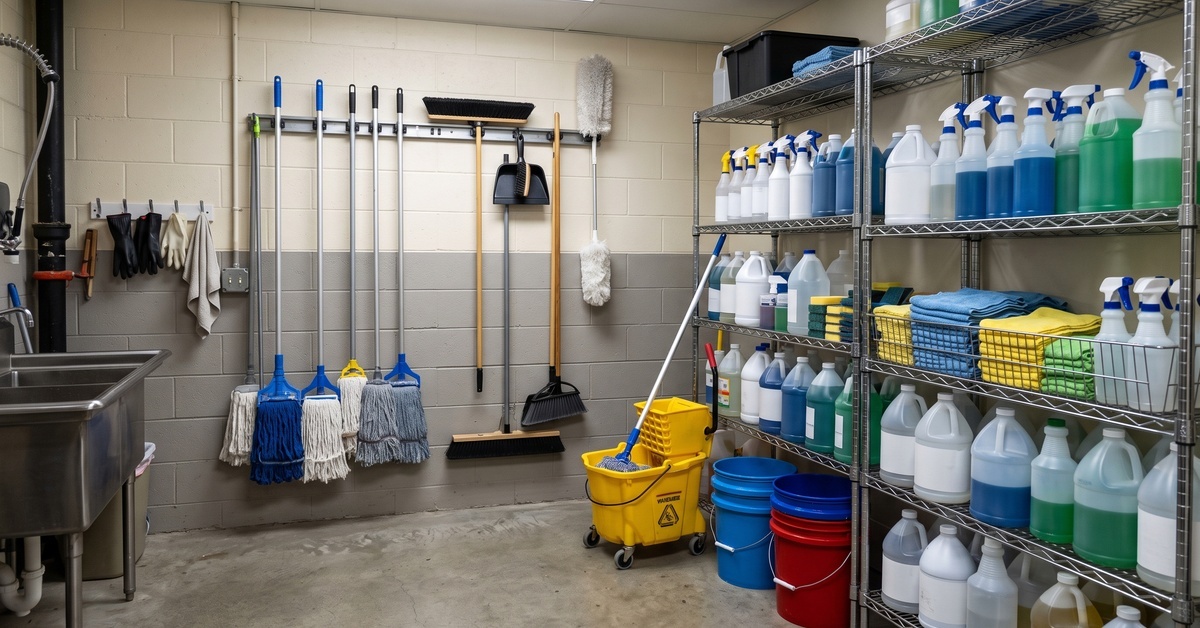
Purchasing efficiency can disappear quickly when employees cannot find the supplies already sitting inside a facility. Disorganized storage rooms encourage duplicate orders, expired chemicals, damaged products, and inconsistent inventory counts. Each location should organize products by category, clearly label storage areas, and keep frequently used items easy to count. Consistent storage practices also make inventory checks faster for employees who manage several responsibilities.
Digital inventory tools can improve visibility further, but organizations don’t always need complicated software to achieve meaningful results. A shared spreadsheet, purchasing platform, barcode system, or standardized inventory form can work when teams update information consistently. Regional or corporate managers should have enough visibility to compare stock levels and purchasing patterns across locations without requesting manual reports every time. Better visibility allows organizations to transfer appropriate products between nearby facilities, anticipate shortages, and avoid unnecessary purchases.
Review Performance and Keep Improving
The strongest programs treat supply management as an ongoing operational process rather than a one-time purchasing project. Cleaning Stuff supports that approach with more than 70,000 professional-grade products selected to provide options across different performance requirements and budgets. Businesses can consolidate essential janitorial purchases while choosing products suited to everything from routine facility care to demanding commercial cleaning jobs. A well-designed, efficient supply program ultimately creates reliable product availability, stronger cost control, simpler procurement, and more consistent cleaning performance across multiple sites.